
Almost every week someone tells me, with a half smile, that my profession is about to die. I've been in marketing for many years, since the days when posting on Facebook counted as "digital strategy". And now everyone is sure AI is going to replace everyone who does marketing, and that in two years there'll be nothing left for us to do.
So let's sort this out. Because both the fear and the confidence here are exaggerated, and the truth sits right in the middle.
What AI really takes
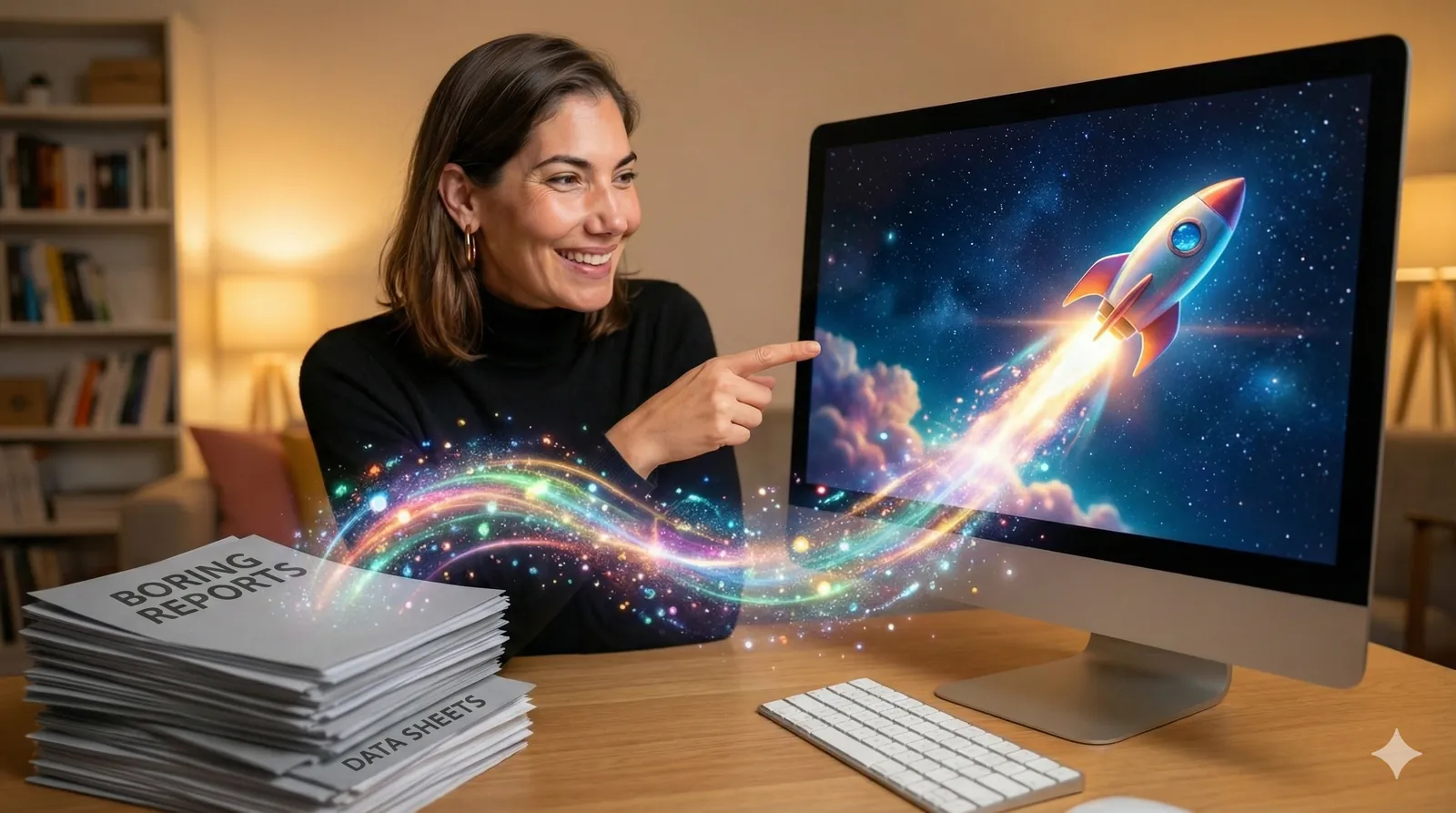
AI takes the manual work. And that's a lot. It writes a draft in thirty seconds. It schedules posts, filters leads, writes a hundred variations of a headline, and gives the same answer for the hundredth time without getting tired or annoyed. Anything repetitive, monotonous and time-eating, AI does faster and cheaper than you.
But notice what it doesn't take. It doesn't decide who you're talking to. It doesn't choose the story. It doesn't know why someone would pick you and not the competitor who looks exactly the same. Those decisions, the core of marketing, are still yours. AI took the keyboard from the marketer. It didn't take their head.
Without strategy, AI just turns up the noise
This is the point nobody tells you, and it's the most important point in this whole article.
AI is an amplifier. That's all it is. Give it a strong strategy, and it will take it and amplify it: more content, faster, more consistent. Give it nothing, and it will amplify the nothing. Anyone without a clear direction now gets the ability to produce a hundred empty posts a day instead of three. That's not an advantage. It's a hole, dug deeper, faster.
That's why I see so many businesses that bought AI tools, produce ten times more content, and nothing happens. The tool isn't broken. There was just no direction underneath it. AI doesn't invent a strategy for you, it only carries out the one you have. If you have none, it carries out the emptiness.
Three places where automation upgrades real marketing
Once there's a direction, there are three places where AI agents really move the needle:
- 1. Content. Not more of it, consistent. The real power is taking one strong idea of yours and using autonomous agents to turn it into ten formats, so you stay present all the time without burning out. Consistency beats occasional genius, and AI agents are a consistency machine.
- 2. Leads. Don't chase, filter and warm up. Instead of you answering every message at the same hour, a system like ManyChat combined with a thinking engine can answer right away, collect the important information, and pass on to you only the people who are really ready for a conversation. You talk to fewer people, and better ones.
- 3. Follow-up. This is where most of the money in a business falls through, and where AI is strongest. It doesn't forget to get back to people, doesn't get tired at the fifth touch, and doesn't give up on a lead just because they didn't answer twice. Most deals don't close in the meeting, they close in the follow-up, and follow-up is exactly what people neglect most.
The one thing you must never hand over to a machine
Your voice.
AI will give you a hundred options. It will draft, suggest, produce. But deciding which one sounds like "us", and which one rings false, that's you. That taste, that judgment, is the only asset a competitor can't copy and AI can't produce.
The moment you hand that over too, and let the machine not only write but also decide what's right for the brand, all your content will start to sound like everyone else's. And that's exactly the danger right now: not that the content will be bad, but that it will be generic. In a sea of machine-made content, the real human voice (what I call "Tech-Humanity") is the only competitive edge left.
What it looks like for me
At AI Team, I built myself a team of agents, based on Claude, that does the manual work of my marketing. They draft, schedule, filter, and follow up on messages in ManyChat and other systems. They're the keyboard.
But the strategy, who the audience is, what the story is, which point of view I hold, and the final decision on how something sounds, stay with me. That's exactly the right split: the machine on execution, me on thinking and voice. That's what lets me be everywhere without being a slave to the feed. Not because I work harder, but because what needs a human hand gets a human hand, and everything else runs on its own.
The bottom line
AI didn't kill marketing. It killed mediocre marketing. Whoever has strategy, voice and judgment just got an engine that amplifies them. Whoever doesn't just got a machine that produces mediocrity on an industrial scale.
So don't ask whether AI will replace you. Ask whether you have the thing it can't replace: direction, and a voice of your own. If you do, you're right on time. If you don't, that's your real work right now, and no tool will do it for you.
Write that down.
Frequently asked questions
Will AI replace marketers?
Not the ones who bring strategy, judgment and voice. AI replaces the manual, repetitive work in marketing, not the decisions about who the audience is, what the story is, and how the brand sounds. A weak marketer will be replaced. A marketer with a strategic head will get a lever.
What can't AI do in marketing?
It can't decide who you're talking to, choose your unique point of view, or know what sounds authentic for the brand and what rings false. Taste and judgment stay human.
Where do I start bringing AI into my marketing?
With the manual work that repeats the most: drafting, scheduling, first replies to leads, and follow-up. Automate that first, and keep the strategy and the voice for yourself.
Is this right for a small business?
Especially. A small business where the owners also do the marketing themselves gains the most from every hour the system gives back, so they have room for thinking and for their relationships with clients.