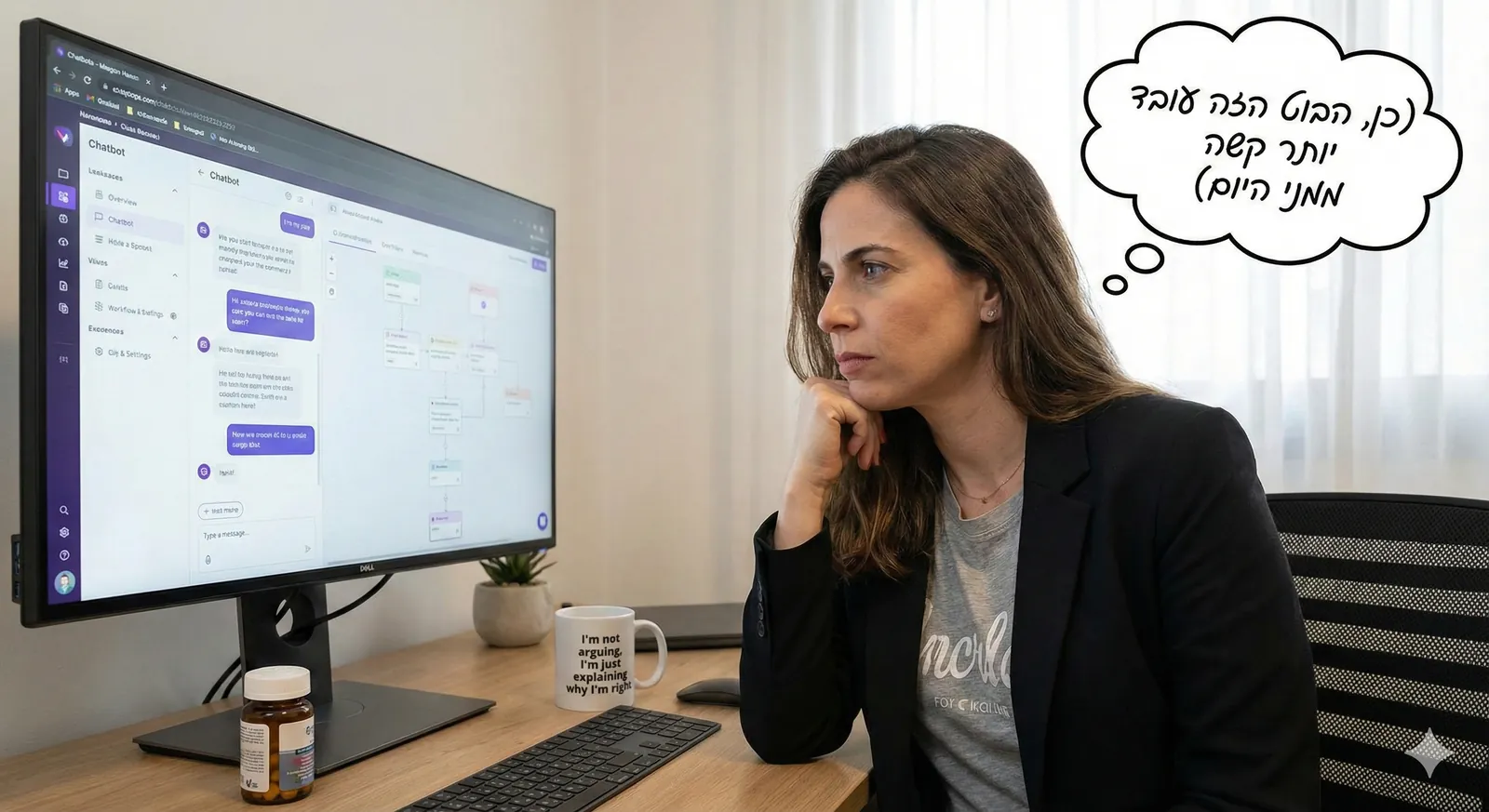
Let's talk for a moment about the elephant in the room. Or rather, the bot in the room. There's been a constant hum in the air this past year. A low frequency of pressure that comes with almost every business conversation. Everyone is talking about AI, about the revolution, about the world changing at a dizzying pace. And out of all that noise comes one question most of us are afraid to ask out loud, so we won't sound "outdated": "Wait, what if I become unnecessary?"
If the computer can write posts, design images, code websites and analyze data in seconds, where does that leave me? All the experience I've built, all the intuition, all the years of hard work, does all of that become irrelevant next to an algorithm that knows everything?
So the short answer is: no. The longer answer is: it leaves you exactly where you're supposed to be. In the manager's chair.
The small difference between knowledge and soul
The truth is, AI is an amazing tool. It really does know almost everything. It has read the whole internet, it knows every marketing model there is, and it doesn't need coffee breaks or sick days. But there's one thing it doesn't have, and never will: intention.
AI doesn't know why you do what you do. It doesn't know that spark in your eyes when you get a new idea at 2 a.m. It doesn't understand the feeling you want your client to have when they land on your website for the first time. It can produce content, but it can't produce a frequency. And that's exactly where you come in. Technology may be the engine, but you're the steering wheel.
Meet your new intern (a genius, but a bit by-the-book)
I like to see AI tools (like ChatGPT, Claude or Gemini) not as "replacements" but as the hardest-working interns in the world. Think of it this way: a new employee just joined your office. He's a genius, he's read every book in the library, he has a photographic memory and he types at the speed of light. But... he has no life experience. He's never been broken, he's never been moved by a sunset, he's never bought a product just because the person selling it touched his heart with one precise word.
If you give this intern a vague, general task like "write me a Facebook post about marketing", he'll write something generic. Boring. Robotic. The kind you can spot from a mile away as written by a machine. Why? Because you didn't give him context. You didn't give him soul.
But if you come to him as a sharp, precise manager and say: "Listen, we're going to write a post now for women who feel overwhelmed by the situation. The tone should be empathetic, warm, but pushing them to act. I want to use the metaphor of 'a storm at sea'. The goal is to give them a sense of calm inside the chaos. Here are the key points..."
Oh, then the magic happens. Suddenly he hands you a draft that's 80% of the way there. He saves you from the fear of the blank page. He puts your thoughts in order. He suggests ideas you hadn't thought of. But the final touch? The emotional precision? That's yours.
From "doer" to "operator": a change of identity
The big change we're going through right now isn't technical, it's mental. We stop being only the ones who "do the grunt work", and become the ones who hold the vision. The Creative Directors of our own business.
That takes a new set of skills. It's no longer just "knowing how to write well", it's knowing how to distill the message. Knowing how to make your language precise when you talk to the machine. Because the machine will do exactly (and I mean exactly) what we ask. Ask crooked, get crooked. Ask precise, get gold. The new art is the art of precision.
So how do you start breathing?
Instead of being afraid the tool will replace you, start asking: "Where can it make time for me?" Where can it take the Sisyphean tasks that drain my energy off my plate?
- Answering the same emails over and over.
- Summarizing long meetings.
- Coming up with Instagram story ideas when my mind is blank.
- Building a monthly Gantt chart in two minutes.
The goal isn't to work less, it's to work right. To make room for the real creative work. For deep conversations with clients, for developing the next product, or just for staring at the sea to recharge (because rest is part of the work too).
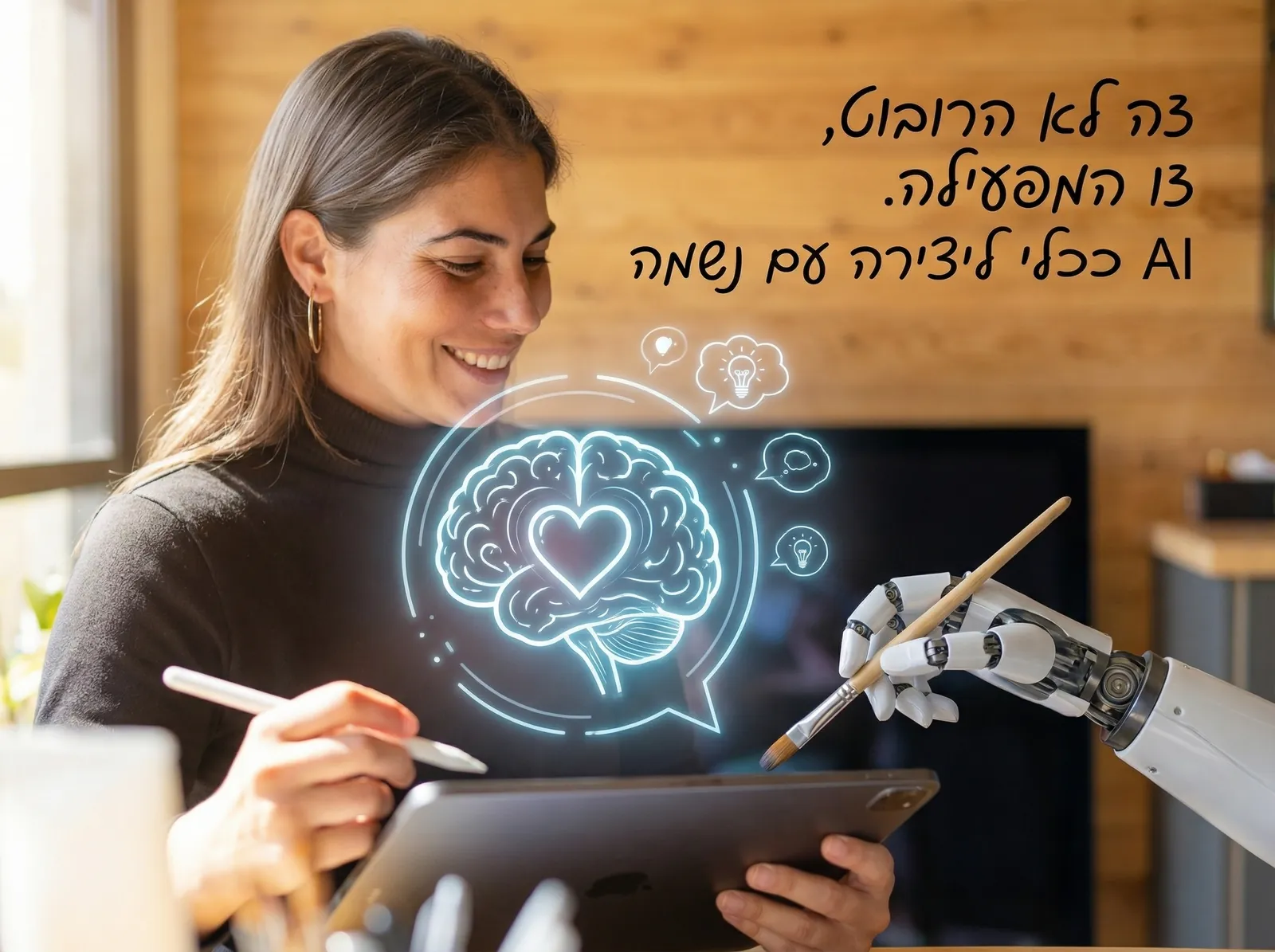
The new world doesn't belong to robots. It belongs to the people who know how to dance with them, lead them, and use them to turn up their own light.